The Annual Vehicle Inspection
Once every twelve months, on every unit in the combination, with the proof carried on the vehicle. Missing records for a majority of your fleet fails a safety audit automatically.

What the rule requires
Under 49 CFR § 396.17, every commercial motor vehicle must be inspected at least once every 12 months, covering the parts and accessories listed in Appendix A to Part 396. A vehicle may not be used unless each of those components passed an inspection within the preceding 12 months and the documentation is on the vehicle.
“Commercial motor vehicle” here is the federal safety definition, which for interstate property carriers starts at 10,001 pounds of rating or actual weight — well below the CDL line. A Class 3 pickup or a hotshot combination can be in scope. See GVWR, GCWR and the weight classes.
Each unit counts separately. In a combination, the tractor, the semitrailer, any full trailer and any converter dolly each need their own inspection. Carriers who think of “the truck” as one thing end up with an inspected tractor pulling an uninspected trailer.
What gets inspected
Appendix A sets the minimum standard. Its headings are:
| Category | Category | Category |
|---|---|---|
| Brake system | Coupling devices | Exhaust system |
| Fuel system | Lighting devices | Safe loading |
| Steering mechanism | Suspension | Frame |
| Tires | Wheels and rims | Windshield glazing |
| Windshield wipers | Motorcoach seats | Rear impact guard |
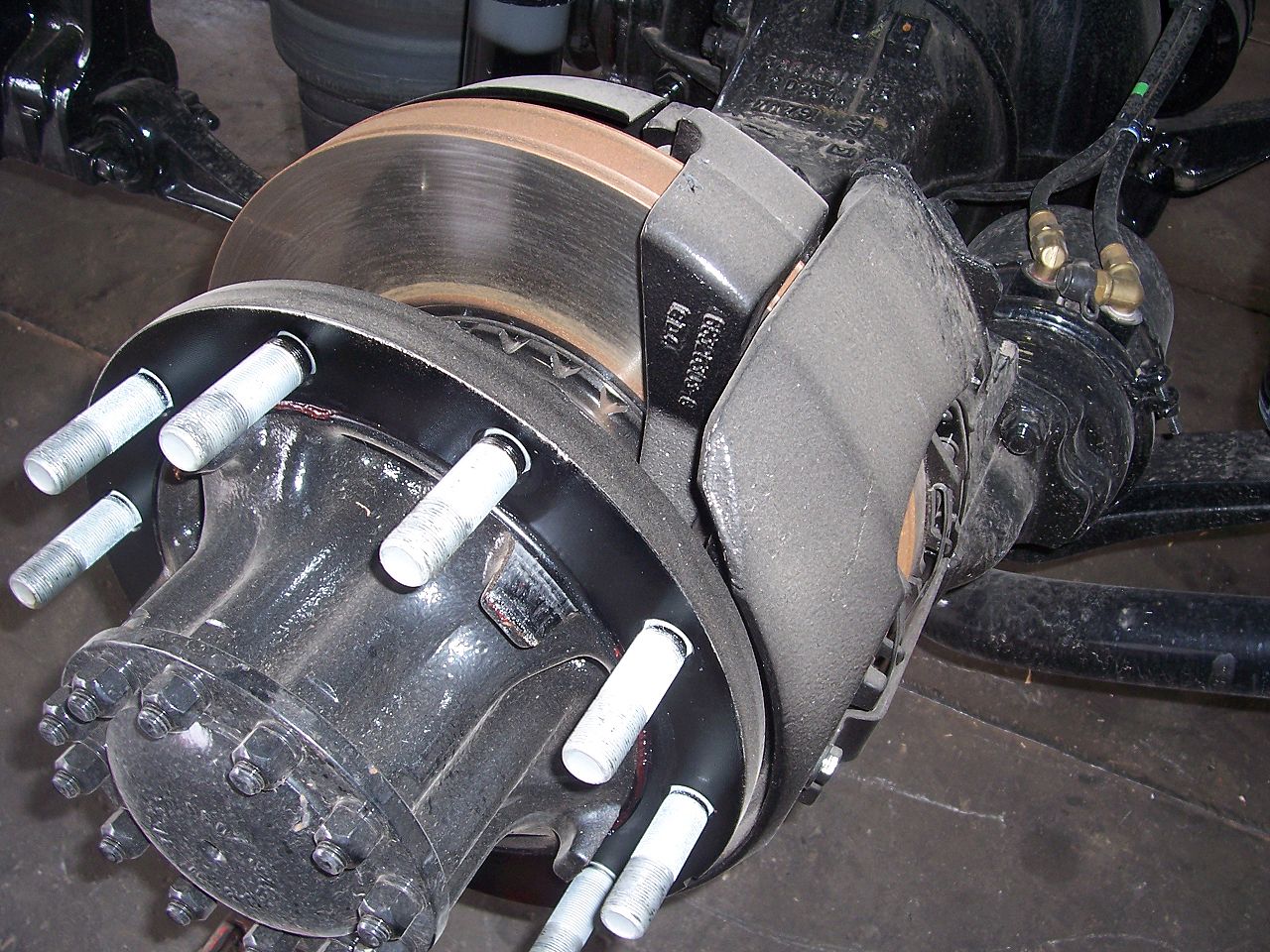
The criteria are specific. A steer tire on a power unit fails with less than 4/32 inch of tread at any point on a major groove; tires on other axles fail below 2/32 inch. Brake pushrod stroke beyond the readjustment limit is a reject. FMCSA's guidance adds that a tire marked “Not for Highway Use” fails, and that an inspector may not certify a vehicle if required components could not be seen.
Who can perform it
You do not have to take it to a dealer. The inspection may be done by:
- The motor carrier itself, or the intermodal equipment provider, and
- Qualified third parties — the regulation names a commercial garage, fleet leasing company, truck stop or similar commercial business — provided they have appropriate facilities and employ qualified inspectors.
The word doing the work is qualified. Under § 396.19 the inspector must understand the criteria in Part 393 and Appendix A, know the methods, tools and equipment, and show capability in one of two ways:
| Route | What counts |
|---|---|
| Formal qualification | Completing a federal- or state-sponsored training programme, or holding a state or Canadian provincial certificate to perform CMV safety inspections |
| Training and experience | At least one year in total of manufacturer or commercial CMV maintenance training, work as a mechanic or inspector in a carrier's maintenance programme or at a garage or leasing company, or work as a government CMV inspector |
The carrier must keep evidence of that qualification for as long as the person performs its annual inspections and one year after. An owner-operator who is qualified may inspect their own vehicle; being the owner does not disqualify you, and being untrained does.
The documentation, and where it lives
The rule is specific: documentation of the inspection must be on the vehicle. That can be either:
- The inspection report itself, or
- A sticker or decal showing the inspection date, the name and address of the inspecting entity, information identifying the vehicle, and a certification that it passed.
The full report, under § 396.21, must identify the inspector, the carrier, the date, the vehicle and the components inspected with the results, and certify that the inspection was accurate and complete. No particular form is required, and FMCSA has said a Spanish-language report is acceptable. Keep the original or a copy for 14 months from the report date where the vehicle is housed or maintained.
A report filed neatly in your office and nowhere near the truck does not satisfy the on-vehicle rule. Keep the copy or decal on the unit and the original in your records. The regulation does not say where on the vehicle; FMCSA's guidance is that the driver must know where it is and be able to produce it.
State inspections usually count. A periodic inspection performed under a state programme, or an equivalent Canadian or Mexican one, that meets the Appendix A minimums satisfies the federal requirement for 12 months from the last day of the inspection month. FMCSA has determined that all Canadian provincial programmes qualify, and states must accept other states' qualifying programmes. If your state already inspects commercial vehicles, you may not need a separate federal annual inspection — check that yours qualifies before paying for both.
Where a state runs a mandatory programme FMCSA has found as effective as the federal one, § 396.23 says you meet the requirement through that programme. If a vehicle is registered in such a state but operated elsewhere, FMCSA's guidance is that you must use the state programme if the state requires it of all registered vehicles; if it exempts vehicles based elsewhere, a self-inspection or qualified third-party inspection will do.
A worked example
A one-truck carrier runs a tractor and owns one dry van:
| Unit | Inspected | How | Good until |
|---|---|---|---|
| Tractor | March 10, 2026 | Commercial garage, qualified inspector | Must pass again within 12 months, so by March 10, 2027 |
| Dry van | March 2026 | Qualifying state periodic programme | 12 months from March 31, 2026: through March 31, 2027 |
Both need their own documentation unless one document clearly identifies every vehicle in the combination. Diary both for February 2027 and they never lapse.

.jpg)
Why this one is worth taking seriously
Using vehicles that have not been periodically inspected is one of the sixteen violations that fail a new entrant safety audit outright, once it shows up in 51 percent or more of the records examined. For a one-truck carrier, 51 percent means one truck. Failing to perform it properly also exposes the carrier to civil penalties under 49 U.S.C. 521(b).
It also feeds the Vehicle Maintenance BASIC, which is publicly visible to brokers. See CSA scores.
Common mistakes
- Forgetting the trailer. Or the second trailer, or the dolly.
- Writing the due date on the decal. FMCSA's guidance is that the documentation must show the inspection date (month and year is enough), not when the next one is due.
- Assuming new equipment is covered. A new truck or trailer still needs a periodic inspection, although a dealer that meets the requirements may provide the initial documentation.
- Treating a clean roadside inspection as the annual. The state allowance in the rule covers periodic inspection programmes. A current annual inspection prevents a § 396.17 citation; it does not stop a roadside inspection.
- No inspector evidence on file when you or an employee did the work.
The routine that works
- Diary it eleven months out, not twelve. Shops get booked.
- One folder per unit, including trailers.
- Copy in the cab, original in the file, kept 14 months.
- Keep the inspector's qualification evidence if you or an employee performs it.
- Keep the wider maintenance record. Under § 396.3, any vehicle you control for 30 consecutive days needs an identification record, a schedule of inspections and maintenance, and a dated record of what was done, kept one year where the vehicle is housed and six months after it leaves your control.
The annual inspection is separate from the daily checks. Those are covered in driver vehicle inspection reports.
Frequently asked questions
How often is the annual inspection required?
At least once every 12 months, for each vehicle including each unit of a combination.
Can I inspect my own truck?
Yes, if you meet the inspector qualification requirements in § 396.19, such as a state certificate or at least one year of qualifying training or experience. The motor carrier may perform its own periodic inspections.
Where must the documentation be kept?
On the vehicle, either as the inspection report or as a sticker or decal carrying the required information. The full report is also kept for 14 months where the vehicle is housed or maintained.
Does a state inspection count?
A state or Canadian periodic inspection meeting the minimum standards satisfies the requirement for 12 months from the last day of the inspection month.
Does a brand-new trailer need an annual inspection?
Yes. New equipment must pass a periodic inspection, though a dealer meeting the inspection requirements may supply the initial documentation.
Related
Sources
- 49 CFR § 396.17 — Periodic inspection.
- 49 CFR Part 385 Subpart D — eCFR.
- 49 CFR § 396.19 — Inspector qualifications — eCFR.
- 49 CFR § 396.21 — Periodic inspection recordkeeping requirements — eCFR.
- 49 CFR § 396.23 — Equivalent to periodic inspection — eCFR.
- 49 CFR § 396.3 — Inspection, repair, and maintenance — eCFR.
- Appendix A to Part 396 — Minimum periodic inspection standards — eCFR.
- § 396.17 regulatory guidance — FMCSA.
- 49 CFR § 385.321 — Failure of safety audit — eCFR.
General information, not legal advice. Regulations change; confirm current requirements with the agency before acting.