How to Get Your Trucking Authority in 2026 (The New Motus Process)
FMCSA is retiring the Unified Registration System. Most of the step-by-step guides you will find online describe a system that is being switched off — here is what the process looks like now.
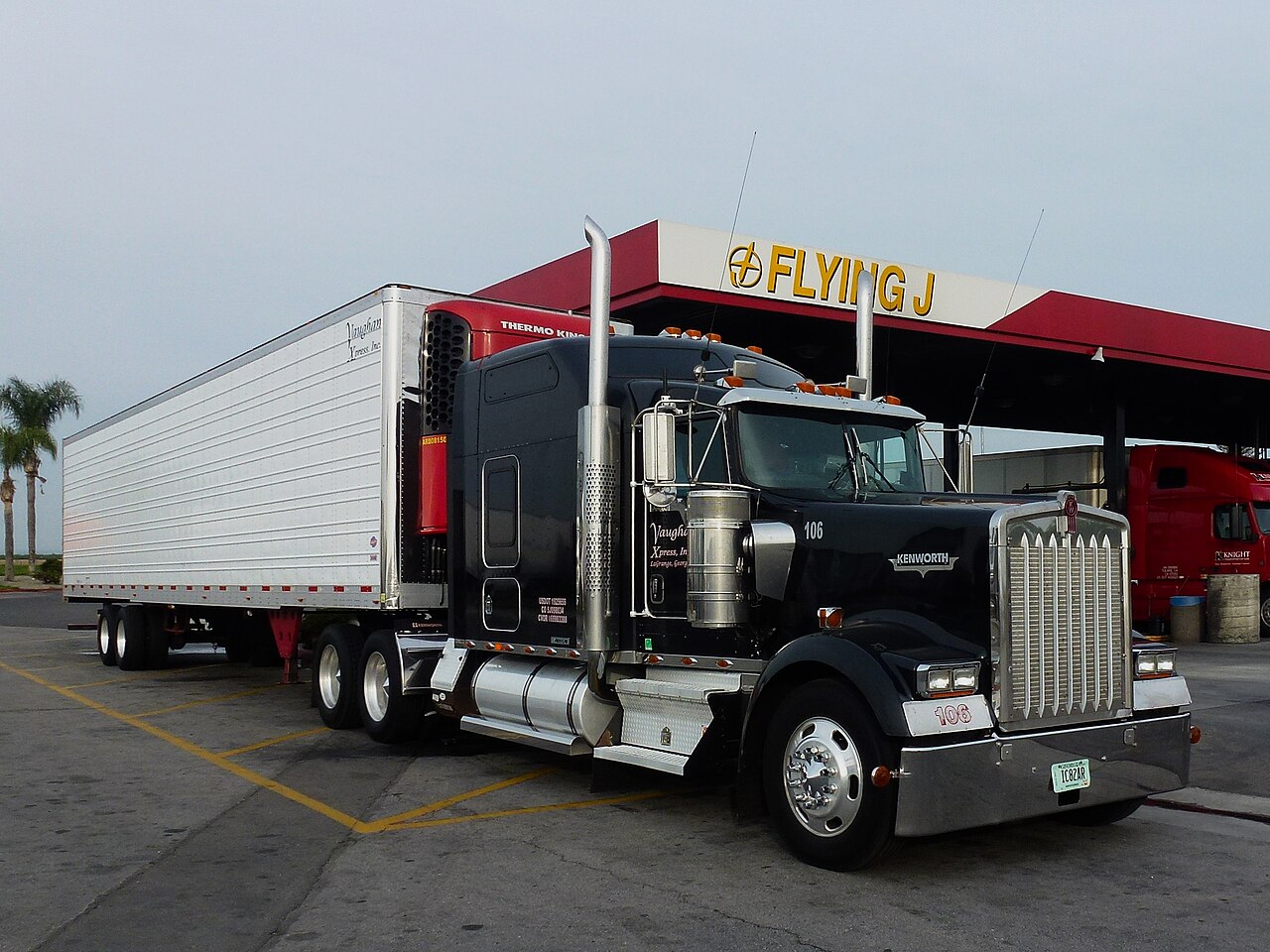
_Truck_Kenworth_at_Flying_J_Travel_(5).jpg)
Why this page exists. In April 2026 FMCSA published a Federal Register notice announcing Motus, a new registration system replacing the Unified Registration System (URS). Add mandatory identity verification and the end of paper payments, and the practical steps for a new carrier are no longer what they were two years ago. Nearly every guide still online walks you through URS.
What changed, in one paragraph
FMCSA has consolidated its registration forms and platforms into a single system called Motus. Phase I opened on December 8, 2025 for supporting companies — blanket companies, financial responsibility filers and transportation service providers. Phase II, covering all regulated entities including new applicants, was scheduled for the second quarter of 2026, with FMCSA indicating that Motus would replace legacy systems starting May 14, 2026. The agency has said URS will be disabled for new applications once Motus is live, and that during the Phase II transition, applicants who use Motus will not be cited or penalised for not using the older forms.
Check before you file. This transition has moved in stages and dates have shifted. Before you start, open FMCSA's registration page and confirm which system is currently accepting new applications. If a guide anywhere — including this one — does not tell you to verify that, treat it as out of date.
Before you start: what you need in hand
- A legal business entity. Sole proprietorship, LLC or corporation, with the exact legal name you will use on every filing. Mismatched names between your entity, your insurance filing and your registration are one of the most common causes of delay.
- An EIN from the IRS, unless you are a sole proprietor using your SSN.
- A government-issued photo ID and a smartphone or tablet. These are needed for identity verification, which is now mandatory. More on that below.
- A Login.gov account. FMCSA's portal uses Login.gov credentials and requires multi-factor authentication.
- A debit or credit card. Paper payment is no longer accepted.
- An insurance agent lined up. Your authority will not be activated until your insurer files proof of coverage with FMCSA, and getting a quote for a brand-new carrier takes longer than most people expect.
Step 1 — Decide what authority you actually need
Two separate things are often confused. A USDOT number identifies your company for safety purposes and is required for most interstate commercial vehicles regardless of whether you haul for hire. Operating authority — historically identified by an MC number — is what permits you to transport regulated commodities for hire in interstate commerce.
If you haul your own goods across state lines, you may need a USDOT number and no operating authority. If you haul other people's freight for payment, you need both. If you operate only within one state, your state may have its own intrastate requirements, and some states require a USDOT number for intrastate carriers as well.
Authority is also granted by type: motor carrier of property, motor carrier of household goods, broker, freight forwarder, and passenger authorities. Each type is a separate application with a separate fee.
Step 2 — Pass identity verification
This is the step that catches people out, because it did not exist a few years ago. FMCSA has partnered with IDEMIA to perform identity document capture and verification. New registrants applying for a USDOT number, or a USDOT number with operating authority, must complete identity proofing before the application proceeds. In practice that means photographing a government-issued ID with a phone or tablet and completing a liveness check.
Budget time for this. If verification fails — a blurred capture, a name that does not match your documents, an expired ID — the application stalls until it is resolved.
Step 3 — File the application and pay
The application collects your business details, the type of operation, the commodities you intend to haul, and your fleet and driver counts. Answer the operation-classification questions carefully: they determine which safety regulations apply to you and what your new entrant audit will examine.
The fee is $300 for each individual operating authority, one time and non-refundable. Two authority types means $600. FMCSA also lists $14 for a name change and $80 for a reinstatement request. There is no separate FMCSA fee for the USDOT number itself.
Payment must be electronic. Since September 30, 2025, FMCSA does not process checks or money orders for any transaction; cheques received after that date are returned and the request is delayed. Motus takes payment through Pay.gov.
You do not have to pay a service to do this. Filing services charge several hundred dollars on top of the $300 federal fee. Many of the sites that rank for this search are those services. They are not doing anything you cannot do, though some carriers happily pay for the hand-holding.
Step 4 — Designate a process agent (BOC-3)
Before authority is granted, you must have a BOC-3 form on file designating process agents — people or companies authorised to receive legal documents on your behalf in every state where you operate. Almost every carrier uses a blanket process agent company that covers all states for a modest annual fee, and that company files the BOC-3 for you electronically.

.jpg)
Step 5 — Get your insurance filed
Your insurer files evidence of coverage directly with FMCSA. The minimum levels of financial responsibility are set in 49 CFR Part 387:
| Operation | Minimum limit |
|---|---|
| Non-hazardous property, vehicle GVWR 10,001 lbs or more | $750,000 |
| Oil and certain listed hazardous materials | $1,000,000 |
| Bulk hazardous substances in cargo tanks; certain Division 1.1–1.3 and highway route controlled Class 7 materials | $5,000,000 |
Two things worth saying plainly. First, these are legal minimums, not what the market will actually sell you or what a shipper will accept — most brokers require $1,000,000 in liability and $100,000 in cargo coverage before they will give you a load. Second, insurance is usually the largest single startup cost for a new carrier, and premiums for an authority less than a year old are substantially higher than for an established one. We cover the numbers in what it actually costs to start.
Step 6 — Wait for the decision
Once the application, fee, BOC-3 and insurance filing are all in place, FMCSA reviews and issues a decision. The agency now publishes its daily decision letters publicly on the day they are generated, so you can see the outcome without waiting for a paper copy in the mail.
Timelines vary with application volume and with how clean your filing is. The two things most within your control are getting the insurance filed promptly and making sure your legal name is identical everywhere.
Step 7 — The New Entrant Safety Assurance Program
Getting authority is not the finish line. New carriers enter an 18-month monitoring period under the New Entrant Safety Assurance Program and must pass a safety audit, generally within the first year of operation. The audit examines whether you have the required systems in place, not whether you have had a crash: driver qualification files, drug and alcohol testing enrolment and Clearinghouse queries, hours-of-service records, vehicle maintenance records, and accident registers.
We cover this in detail in the new entrant safety audit. The practical implication is that the paperwork discipline needs to start on day one, not on the day the auditor calls. A carrier that has been operating for eight months with no driver qualification file and no maintenance records has a problem that cannot be fixed retroactively.
What about MC numbers going away?
You may have read that MC numbers are being eliminated. Here is the accurate version. FMCSA has stated that MC docket numbers were never a statutory or regulatory requirement — they were a historical tracking device — and that it is considering phasing them out, with each operating authority type indicated instead by a suffix on the USDOT number. In the Motus notice, however, FMCSA explicitly deferred eliminating motor carrier and freight forwarder docket numbers after stakeholder feedback. FMCSA has also said existing MC numbers would not be replaced by USDOT numbers.
So: MC numbers still exist, yours remains valid, and no elimination date has been set. Anyone telling you MC numbers were abolished in 2026 is ahead of the facts.
Common mistakes
- Name mismatches. Your entity name, insurance filing and registration must match exactly, punctuation included.
- Buying insurance last. Start the insurance conversation before you file, not after. It is usually the long pole.
- Following an outdated guide. If a walkthrough references URS forms and says nothing about identity verification or electronic payment, it predates the current process.
- Treating the safety audit as a future problem. Compliance files are built from day one or they are not built at all.
- Assuming federal authority covers everything. States have their own registrations and taxes on top — see our federal fee reference and check your base state's requirements.
Frequently asked questions
Do I still get an MC number in 2026?
Yes. FMCSA deferred retiring MC docket numbers after stakeholder feedback, so they are still issued and existing numbers remain valid. A future phase-out is under consideration, with no date set.
How much does operating authority cost?
$300 per individual authority, one time and non-refundable. Multiple authority types mean multiple $300 fees. The USDOT number itself carries no separate FMCSA fee.
Can I still pay FMCSA by check?
No. Since September 30, 2025 FMCSA does not process paper payments for any transaction. Debit or credit card only.
How much insurance do I need to file?
At least $750,000 in public liability for non-hazardous property in vehicles rated 10,001 lbs or more, under 49 CFR § 387.9. Hazmat operations require $1,000,000 or $5,000,000 depending on the material. Brokers will typically ask for more than the legal minimum.
Do I need a process agent in every state?
You need process agents designated for the states in which you operate, filed on form BOC-3. Blanket agent companies cover all states in a single filing, which is what most carriers use.
Next steps
- What it actually costs to start a trucking company — the full financial picture, with sourced numbers.
- UCR fees for 2027 — the annual registration you will owe once you are running.
- Cost per mile calculator — work out whether the rates you are being offered actually clear your costs.
Watch
HOW TO Register, FMCSA Registration Overview for Motor Carriers (FMCSA OFFICIAL VIDEO) — FMCSA. The video loads from YouTube only when you press play.
Sources
- Availability of Motus, FMCSA's New Registration System — Federal Register, April 29, 2026.
- FMCSA Registration — Federal Motor Carrier Safety Administration.
- FMCSA Registration Alerts — identity verification, electronic-only payments, daily decisions.
- What is the cost of obtaining operating authority? — FMCSA FAQ.
- If FMCSA stops issuing MC Numbers… — FMCSA FAQ, updated May 21, 2026.
- 49 CFR Part 387 — Minimum Levels of Financial Responsibility for Motor Carriers — eCFR.
This page is general information, not legal advice. Requirements change; confirm current rules with FMCSA before filing.